

Synopsis
From Yemen to Zion: A Personal Collective Memory is a sweeping family memoir that tells the story of a Yemenite Jewish family. It begins in the Jewish quarter of Sana’a in 1936, with the birth of the author’s mother – an illiterate girl married off at the age of ten to her eighteen-year-old uncle – and ends in 1976 in Tel Aviv, in the home of the author, a 21-year-old IDF officer full of academic aspirations.
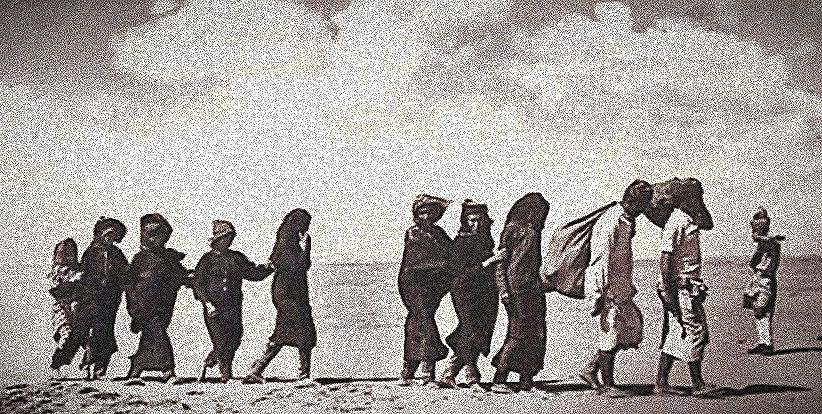
Through the story and the historical events that shaped the immigration of Yemen’s Jews (the first mass immigration from the East), the book reveals the texture of the ancient Yemenite Jewish experience, whose existence came to an end with the founding of the State. In a mighty stream of 50,000 people over about a year and a half, the Jews of Yemen left Sana’a and more than a thousand villages – in trucks, on the backs of donkeys and on foot – on their way to Israel, the object of their spiritual longing. The book recounts the suffering bound up in the immigration operation, which the Israeli narrative has tended to play down. The journey, which took a toll in lives, also exacted a heavy economic and spiritual price, as the immigrants were robbed of their money and their cultural and spiritual treasures by those who helped bring them. The depletion of these newcomers from a pre-modern, isolated, God-fearing and naive world made them, after their arrival, easy prey of another kind. And so – between redemption and loss, within a single generation, a new narrative was formed through a painful and turbulent navigation between the values of East and West, religion and secularism – as ancient ways of life gave way to the new Zionist melting pot.


Reviews
Moshe Halbertal
Professor of Philosophy, Hebrew University
On the Wings of Eagles presents a captivating and rich tapestry. It weaves together a painful story of flight, the challenges of immigration which lie at the heart of the clash between a traditional Yemenite Jewish community and an Ashkenazi Labor Zionist secular ethos. It is, as well, a deeply astute psychological portrayal of the family dynamics of parents, their struggles, vulnerabilities and courage, and a moving account of self-discovery. From this intimate personal perspective of the author’s coming to adulthood, emerges a powerful portrait of Israel in its early years featuring its fissures and promises. A thrilling and extraordinary achievement.
Eva Illouz
Professor of Sociology. Author of Explosive Emotions: How Modern Society Shapes What We Feel (March 2026).
This is an engrossing book, at once a moving family memoir and a startlingly novel way to recount the history of Israel and Zionism. The reader will find no stoic pioneers or glamorous military victories here but will encounter the poignantly flawed personalities of obscure Yemenites who patiently and painstakingly built Israel from below. It is a memoir about the obstinacy of Yona and Shimon to make do with whatever the young state would provide them with: pride, shelter, but also poverty, racism, and shame. It is about the passionate struggle of a young girl to fit in. Ultimately, it is about the untold hardships of an entire community.
Kehati-Bronner’s memoir tells the story of Zionism afresh without complacency, self-pity or accusations. One cannot fail to be unsettled and moved by this sober account.
Noa Tishby
Best-selling author and Israel’s former Special Envoy for Combatting Antisemitism
Naomi Kehati Bronner tells a story long needed to be told, a central component of the Israeli narrative – the mass immigration to Israel of the Jews of Yemen and the rest of the Middle East due to discrimination and yearning to return to their ancestral homeland. She’s done it through her family and herself, without pulling punches, giving the book depth, heart and drama.
Nicholas Lemann
Teaches at Columbia Journalism School; author and staff writer at The New Yorker
This is a beautifully written and deeply affecting personal history, about a group the world knows far too little about – Yemenite Jews, who escaped dire conditions to come to the brand-new state of Israel, where once again they had to struggle against poverty and discrimination. Naomi Kehati Bronner is a natural storyteller, with an eye for vivid detail and keen powers of psychological insight.
Brooke Gladstone
Host of Public Radio’s “On the Media”
On the Wings of Eagles is a deeply satisfying read, and a profound one. No word is wasted here – every phrase, every metaphor, every anguished and ecstatic memory, conveys the lived experience of a place and time rarely chronicled, that of the Jews of Yemen and their migration, some by choice, some by force, to the new state of Israel.
But this multi-generational saga is ultimately about the shaping of one remarkable individual, Naomi Kehati, straddling the old world, where her dreams were discouraged as too big, and the new one, where hobbled by prejudice, and her determination to find her own way.
It’s a tale that leaves the reader both humbled and full of hope.
Readers’ Praise
Yoel Esteron, former editor-in-chief of Calcalist
A powerful, moving, courageous, and painful book – Naomi Kehati Bronner’s A Personal Collective Memory is an essential document for anyone who wants to understand the Israeli story of immigrants from Yemen. A family living in abject poverty in Yemen, the suffering and hardships endured on the journey to Israel, and the difficult struggle to establish a new life in the transit camp – all of these formed the backdrop to Naomi’s childhood. She was the daughter of a father who worked as a school caretaker and a mother who cleaned houses all her life, and grew into a young woman who chose to break free from the constraints of rigid religious tradition, eventually becoming a psychologist with a PhD from Columbia University in New York.
Give yourself the gift of an inspiring experience.
Dita Kol Roman
A few moments ago, I finished reading Naomi Kehati Bronner’s book, From Yemen to Zion – A Personal Collective Memory. The reason I read it over the course of just ten days was simply that I didn’t want the experience to end. It is a moving account of a journey of personal and family self-discovery, interwoven with the story of the Israel I grew up in. Naomi’s insights have psychological depth and offer a nuanced perspective, without the need for any demagogic framing – all while making for a moving and enjoyable read. I highly recommend it.
Readers – A Community for Book Lovers
In From Yemen to Zion, Naomi Kehati Bronner tells the story of the Yemenite Jewish community. She briefly reviews chapters in the community’s history and its relationship with its surroundings, up until the mass immigration that followed the establishment of the State of Israel. She also addresses many aspects of the process of absorption and integration into their new home. The book provides insight through personal and communal stories. It is informative, engaging, and recommended.
Dr. Merav Alush-Levron – Cultural Researcher and Social Activist
Naomi Kehati Bronner, the psychologist – brilliant and gifted with extraordinary insight and depth of thought, always able to illuminate hidden layers – has, at long last, published her important book, From Yemen to Zion. This is a story that moves between biography and historical testimony. I strongly encourage you to buy the book and read it. It deserves its rightful place, alongside its heroes and heroines, in the story of the Jewish, Zionist, and Israeli experience. Wishing you success on this journey. I am proud of what you have accomplished.
Rivka Kadim
I can’t put the book down. I usually read about the Jewish communities of Europe, so this is a new subject for me. It is difficult to comprehend the suffering this community endured before finally arriving in Israel and beginning the process of adapting to life here. You have done an outstanding job – work that would rival that of leading historians.
Nitza Weinstein
I have just finished reading your book.
It is difficult for me to find the words to describe my feelings about your extraordinary journey. It is an awe-inspiring journey, deeply moving and filled with immense admiration. Your ability to describe it in all its rawness and honesty makes it possible to empathize with and understand each of the characters – even when they are difficult and frightening – to appreciate their strength and the struggle each one waged, in their own way, with the little they had. Thank you for making it possible for me, for the first time in three years, to read a book from beginning to end.
Ami Moran
From the moment I started reading it, I couldn’t put the book down. Along the way, I was introduced to several significant events in the history of Yemenite Jews, such as the Mawza Exile, for example. I also encountered memories from my own childhood – the carts of the ice vendors and the curved metal rods they used to grip the blocks of ice they sold, the dreadful kerosene stoves of our childhood, and more. I even came across a song I hadn’t heard in a long time – “Things of No Importance” by Naomi Levy, from the 1964 Israel Song Festival.
This book carries us across the landscapes of Jewish history, both near and distant, gently, slowly, and tenderly. It allows us to drift on the wings of imagination, and not only on the wings of eagles. I highly recommend it.
Rina Castelnuovo
Yesterday I finished the book, which kept me awake until the early hours of the morning. The pain that accompanied the writing is felt so powerfully in every chapter, even when you offer moments of consolation. I knew nothing about the hardships endured by Yemen’s Jewish community: the constant struggle to find a piece of bread and the hunger that was part of everyday life, the deaths of infants, the pogroms, and the terrible suffering that accompanied those who immigrated to Israel. Thank you, Naomi, for exposing this tragic chapter of our history, one that so few of us know. What hits you like a punch in the gut is your own struggle – the story of a gifted and beautiful young girl who was so determined to integrate into a society and environment marked by discrimination and racism, while at the same time confronting the rigid traditions she had grown up with at home. Thank you, Naomi, for the courage to reveal it all.
Media Interviews
Culture Agent (Kan) with Kobi Meidan | 24.07.26
The full interview “From Yemen to Zion: A Personal Collective Memory” – Naomi Kehati Bronner, from minute 20 Watch >>
A Conversation with Michael Miró, Israeli Journalist
How can we transform silenced memory, cultural dispossession, and thousands of years of oppression into personal and collective healing? I invite you to watch and listen to a particularly fascinating episode of In-Depth Conversations with clinical psychologist and author Dr. Naomi Kehati Bronner, marking the publication of her new book by Resling Publishing, From Yemen to Zion: A Personal Collective Memory. In this candid, sensitive, and powerful conversation, we delve into wounds from the past that were not always spoken about at home:
Arriving robbed and ill – the plundering of the cultural and intellectual heritage of Yemenite Jews along the way, and the racism they encountered in the transit camps.
The girl who fled on foot – the unbelievable story of Naomi’s mother, who was given away at the age of ten as repayment for a debt, escaped alone alongside a donkey, and made her way to Israel, entering a life of survival and struggle.
Between silence and the Yemenite Children Affair – the family and intergenerational struggle of the second generation as it confronted the trauma of immigration.
From the Columbia campus to the therapy room – how the identity gap gave rise to her doctoral work, and how her personal story entered the therapy room.
A conversation that represents an important step toward the “detoxification” of our social and cultural world – something we all need in order to heal. Watch the conversation >>

About Dr. Naomi Kehati Bronner
I was born in the Yad HaMa’avir transit camp in December 1955. When I was a year and a half old, my parents moved to a house in Hadar Yosef, a working-class neighborhood on the outskirts of Tel Aviv, where I grew up.
I attended Ironi Dalet High School, and I served three years in the army, including as an officer in the Nahal.
After my military service I began my university studies and completed a bachelor’s degree in Middle Eastern History and Islamic Studies. I was not accepted to study psychology because my matriculation grades did not meet the admission requirements. At the same time, I worked as an El Al flight attendant, for both pleasure and a living.
In my late twenties I met my partner, Ethan Bronner, an American Jewish journalist, and followed him to America. There I began my studies in psychology, which culminated in a doctorate in clinical psychology from Columbia University in New York in 2006.
Today I am a clinical psychologist in private practice, dividing my time between New York and Israel.
I have two sons, Elai and Gabriel, and two grandchildren, Hugo and Ayala.


Contact
Have a question, a thought, or would you like to hear more about the book?
Leave your details and I’ll get back to you as soon as possible.